

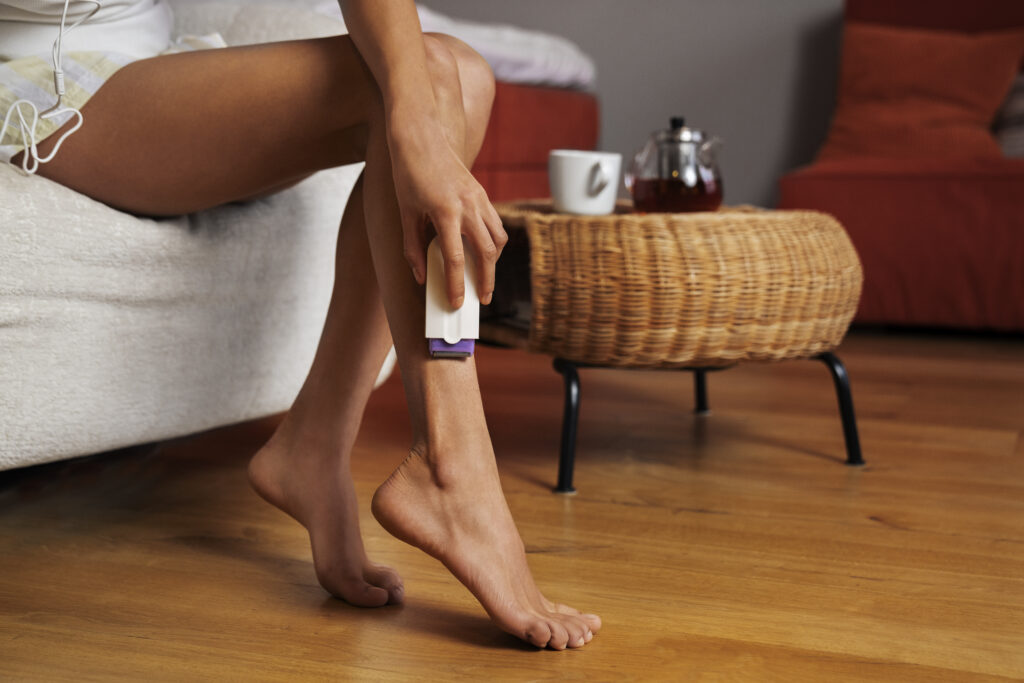
Over the last decade, at-home intense pulsed light (IPL) or laser devices have become more advertised more and more. But are these devices effective and more importantly, are they safe?
Professional hair removal treatments create more consistent results with fewer risks from misuse, including hyperpigmentation, skin irritation, burns or eye injury.
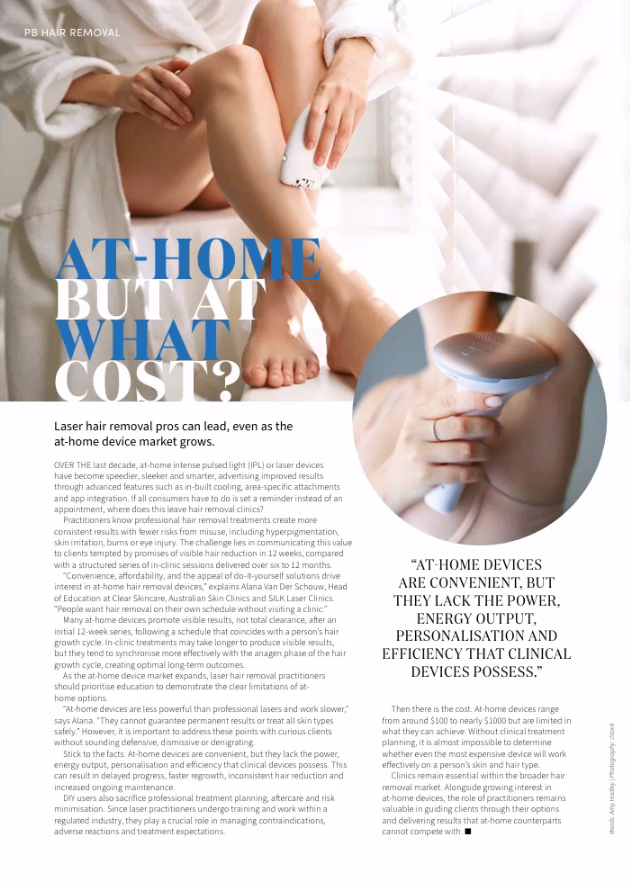
“At-home devices are less powerful than professional lasers and work slower,” explains Alana Van Der Schouw, Head of Education at Australian Skin Clinics. “They cannot guarantee permanent results or treat all skin types safely.”
“People want hair removal on their own schedule without visiting a clinic.”
Many at-home devices promote visible results, not total clearance, after an initial 12-week series, following a schedule that coincides with a person’s hair growth cycle. In-clinic treatments may take longer to produce visible results, but they tend to synchronise more effectively with the anagen phase of the hair growth cycle, creating optimal long-term outcomes.
However, at home devices have their limitations.
“At-home devices are less powerful than professional lasers and work slower,” says Alana. “They cannot guarantee permanent results or treat all skin types safely.”
At-home devices are convenient, but they lack the power, energy output, personalisation and efficiency that clinical devices possess. This can result in delayed progress, faster regrowth, inconsistent hair reduction and increased ongoing maintenance.
DIY users also sacrifice professional treatment planning, aftercare and risk minimisation. And therapists in clinic undergo training and work within a regulated industry, which plays a crucial role in managing contraindications, adverse reactions and treatment expectations.
Then there is the cost. At-home devices range from around $100 to nearly $1000 but are limited in what they can achieve. Without clinical treatment planning, it is almost impossible to determine whether even the most expensive device will work effectively on a person’s skin and hair type.
“At-home devices are convenient, but they lack the power, energy output, personalisation and efficiency that clinical devices possess.”
Read the full Professional Beauty article here.
Disclaimer: This article is provided for general informational and educational purposes only and does not constitute medical advice, diagnosis or treatment. The information presented should not be relied upon as a substitute for professional medical or skincare advice.
Treatment suitability varies between individuals and should be determined through a consultation with a qualified skin professional or healthcare practitioner. Any skincare, cosmetic or laser treatment discussed may involve risks, side effects and aftercare requirements that should be considered before proceeding.
While at-home devices and treatments may be discussed in this article, they may not be suitable for all skin types or concerns. Professional assessment is recommended before commencing any treatment program.
Individual results may vary. Outcomes depend on factors including skin type, medical history, treatment adherence and individual response.
If you have a medical condition, are taking prescription medication, are pregnant or breastfeeding, or have concerns about treatment suitability, seek advice from a qualified healthcare professional before undertaking any cosmetic or skin treatment.
For information on how Australian Skin Clinics collects, uses and protects your personal information, please refer to our Privacy Policy.Australian Skin Clinics promotes evidence-informed care, personalised treatment plans and realistic outcomes. Treatment recommendations should always be based on an individual consultation.