



You bought the device. You read the reviews, watched the tutorials, and stuck to the schedule on the box. Some weeks your skin looks brighter; other weeks you’re not so sure. And somewhere along the way, a quiet doubt sets in about whether any of it is doing much, or whether a treatment in the clinic would get you there faster. It’s a fair thing to wonder.
Alana Van Der Schouw, Head of Education across Australian Skin Clinics, SILK Laser Clinics and Clear Skincare Clinics, hears this question constantly, and she gets why people reach for a device first. They’re convenient. They’re affordable. You can use one on a Sunday night in your own bathroom, no appointment, no waiting room. None of that is wrong, and we’d never tell you to throw your gadgets in the bin. What’s worth understanding is the point where convenience stops and a different kind of result begins.
The short version is that a good home routine is brilliant for keeping your skin happy, while a professional treatment at a clinic is what you turn to when you want a real, visible change. It’s a question people across Australia ask more than you’d think. It helps to know what your devices genuinely do well and where a clinician picks things up.
What at-home devices are designed to do, and why that matters
It’s tempting to think of a home device as a smaller version of the machine in the clinic. It isn’t. They reach different depths and run at different intensities, and there’s one difference that matters more than any spec on the box. A home device works on its own, whereas a clinical treatment starts with a qualified clinician looking at your skin first.
There’s a sensible reason for that. A device sold to the public has to be safe in the hands of someone with no training, on any skin, in any bathroom. So it’s dialled to a setting that suits almost everyone, which is exactly why it can’t be tuned to you. The one-size-fits-all setting can’t read your skin tone, your hair, your history or the skin concern that’s actually bothering you, and that’s where the results quietly start to part ways.
It really comes down to how deep the treatment reaches, how powerful the results are, and whether a trained pair of eyes has assessed your skin before anything switches on. That difference shows up clearly in the treatments people ask about most.
At-home IPL and professional laser: understanding the difference
Most people who buy an at-home IPL handset are after the same thing. Less shaving, less waxing, and hair that thins out and stays that way. It’s a reasonable goal, and IPL can nudge you toward it. The honest part is knowing how far one of these devices will actually take you, and where it tends to stall.
What at-home IPL can realistically deliver
IPL works by spotting the contrast between dark hair and lighter skin, so it does its best work on fair skin with dark hair. If that’s you, several months of regular, consistent use can leave hair looking finer and patchier. That’s a real result and worth having. It’s also a fairly narrow window, so it helps to know upfront whether your colouring sits inside it before you spend the money.
Even then, there’s a ceiling, and Alana is upfront about why. At-home devices, she says, “are less powerful than professional lasers and work more slowly” and they can’t promise the hair is gone for good.
A lot of that comes down to timing. A handset fires on whatever day you pick it up, but your hair doesn’t grow on that schedule. Each follicle moves through active and resting phases, and treatment only really lands while it’s active. That mismatch is one of the big reasons clinic treatment pulls ahead over a full course.
This is where in-clinic laser hair removal works with that timing rather than against it. Your sessions are spaced to catch follicles while they’re active, and the clinician sets the device to suit your skin tone and hair type before you start. That kind of tuning and that timing are simply something a fixed-setting handset can’t do at home. The devices used in the clinic are also TGA-listed, so the safety and performance standards are a different category entirely.
Where at-home IPL has real limitations
Here’s the part the packaging tends to gloss over. At-home IPL isn’t suitable for all skin types. Because it leans on the contrast between dark hair and lighter skin, it struggles with two groups in particular. The first is fine or fair hair that doesn’t give it enough to target. The second is deeper skin tones, where the wrong settings carry a higher risk of irritation or patchy pigmentation.
If you have richer or darker skin, that’s not a reason to give up on smooth skin. It’s a reason to have a clinician look first. In the clinic, your skin is assessed before anything is switched on, and the treatment is matched to your tone. A handset on your bathroom shelf can’t make that call because it can’t see you.
The trouble starts when the skin and the settings don’t match. None of the following is a given, but they’re the reasons we’d rather you knew what to watch for:
- Hyperpigmentation and uneven skin tone
- Redness and skin irritation that lingers
- Burns from incorrect settings for the skin type
- Eye injury without proper protection
- Possible stimulation of new growth
Skin treatments that don’t have a home equivalent
With hair removal, your handset and the clinic are at least doing related jobs. A few of our skin treatments are a different story because there’s no home version to compare them to in the first place. A cheaper one doesn’t exist; the treatment just isn’t something you can buy in a box. Two good examples are worth walking through.
HydraFacial and Microdermabrasion
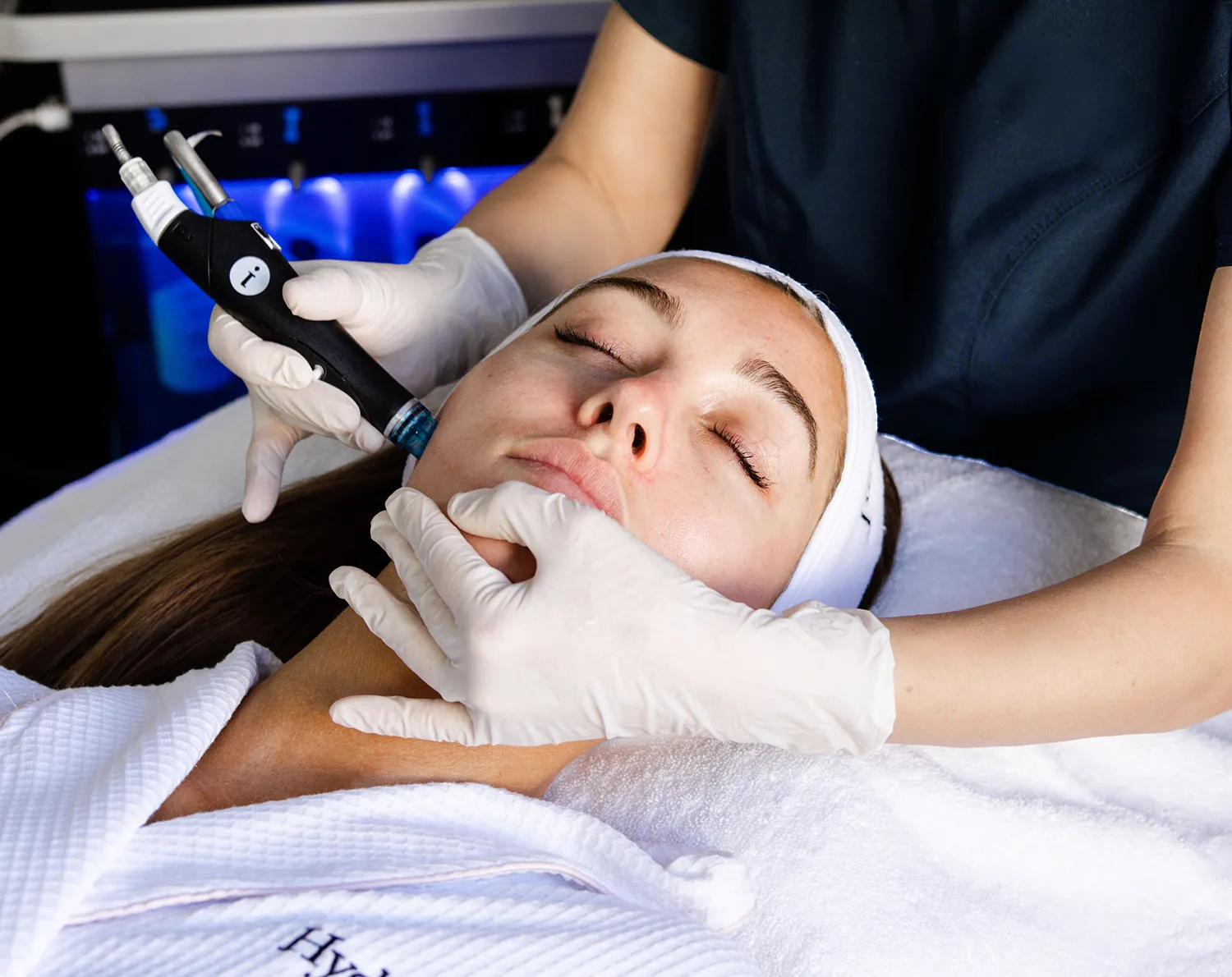
Your cleansing brush and exfoliating scrub earn their spot on the shelf, keeping your skin clean and smooth right at the surface, which is exactly where they’re meant to work. A HydraFacial does three jobs in one sitting that no cleanser can stack together: deep-cleaning, lifting away dead skin, and flooding the surface with hydration in a single pass. That’s not your nightly routine turned up louder; it’s a different process entirely.
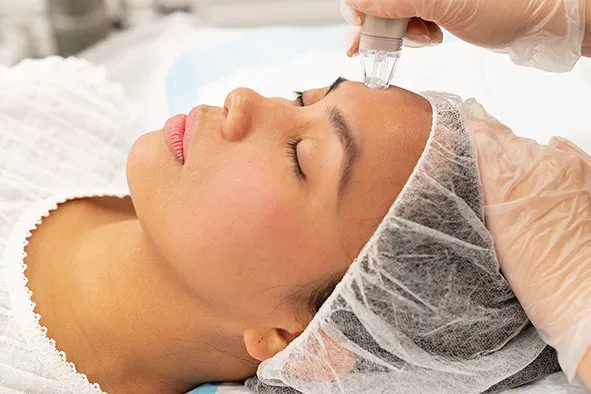
Microdermabrasion works much the same way, using a fine, controlled tip and gentle suction to resurface the skin with a level of precision a handheld gadget can’t reach. So this isn’t a case of clinic versus home doing the same job at different strengths. It’s a treatment your bathroom shelf simply doesn’t carry.
At-home peels and MediPeels
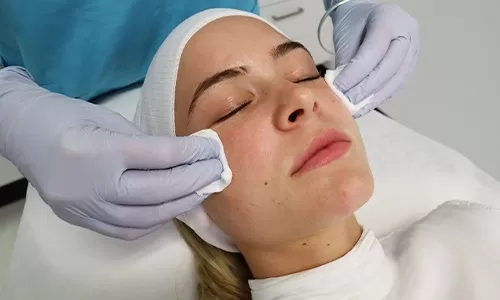
Home peels are a slightly different case, because here there is a home version, and a good one is worth having. The right acid, used consistently, can soften uneven tone and smooth rough texture over time. What holds an at-home peel back isn’t the brand or your commitment. It’s the rules.
A peel you can buy off the shelf has to be safe to use without clinical training, so the active strength is kept well below what a clinic can work with. A professional MediPeel is chosen for your skin on the day by someone who’s looking at how it is behaving right then. The tailoring that comes with a clinical peel directly targets those skin concerns you can’t quite shift, leading to more noticeable improvements.
LED at home and in clinic: a more nuanced conversation
A good LED mask, used regularly, can help keep your skin’s tone and texture ticking along nicely. It won’t do the job of a full treatment plan.
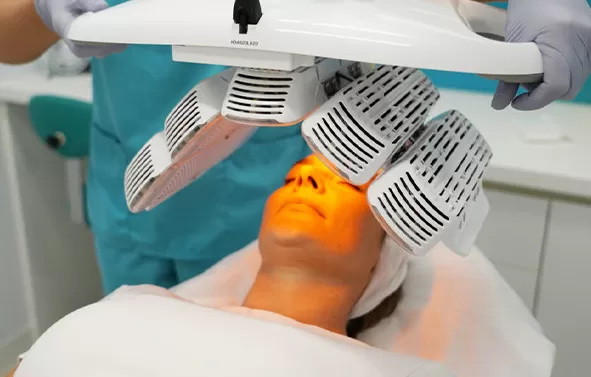
It all comes back to what you’re asking the light to do. A home mask is built for upkeep. Clinical LED Light Therapy produces a stronger output, so it reaches further and gives your skin more to respond to when you’re working on something specific rather than just keeping things steady.
Thinking about which one suits your skin
A simple way to tell. If there’s a stubborn concern that hasn’t budged no matter what you’ve thrown at it, a home device is unlikely to take you as far as you need to go. That’s the point to come in and let a clinician take a look.
In the clinic, an LED treatment rarely works alone. A clinician can pair it with other treatments and tweak things as your skin responds week to week. A mask on your face at home, however good, can’t read how your skin is reacting and change tack. That’s the bit a person brings that a gadget never will.
The part of professional treatment that no device is built to do
Here’s the thing: no device on the market can do it, no matter how clever it gets. Every treatment with us begins with a clinician actually looking at your skin, asking what’s been bothering you, hearing what you’d love to change, and telling you straight what will help and what won’t. That conversation shapes everything that follows.
Alana sums it up well when she says home devices are convenient, but they don’t have the power, tailoring, or efficiency of clinical tools. A handset repeats the same setting every time you switch it on. A clinician reads your skin, clocks what’s changed since last time, and adjusts on the spot. One follows a script. The other pays attention.
Across all 180-plus clinics, your treatment is carried out by AHPRA-registered practitioners, using TGA-listed devices where they apply. No secrets, no hard sell. And if a treatment isn’t right for you, you’ll be told so, even if that means we don’t book you in.
If you still can’t quite tell where your home routine ends and professional treatment should begin, you don’t have to work it out alone. A clinician can talk it through with you and point you in the right direction.
Working out your next step
None of this means your shelf of devices was a waste, far from it. The ones that earn their place are worth keeping, because they hold your skin steady and stretch out the time between visits. The honest line between the two is fairly simple. Home care maintains, and treatment in a clinic is what tends to move things when you want a genuine change rather than upkeep.
And if you’d like a clearer read on your own skin, a skin consultation is the easiest way to find out where you stand, and there’s no pressure to book anything on the day. There’s no rush and no wrong answer.
FAQs
Are at-home skin devices as effective as professional treatments?
At-home skin devices can support your routine, but they are usually designed to work at lower strengths so they can be used safely without a clinician present. Professional treatments are more targeted, more adjustable and guided by an assessment of your skin, which is why they can often take you further.
Why am I not seeing the results I expected from my at-home device?
Your device may be working more slowly than expected, or it may not be the right match for your skin, hair type or concern. Many at-home options are also capped at a home-safe strength, which means they can support progress but may not be able to push past a certain point.
Do at-home IPL devices deliver the same results as professional laser hair removal?
Professional laser hair removal is tailored to your skin tone, hair type and growth cycle, which can make the results more consistent across a proper treatment plan.
Is there still a reason to book professional LED if I use an LED mask at home?
A good LED mask can be useful for maintenance, however Clinical LED Light Therapy works at a higher intensity and is often used when your skin needs more targeted support than a home device can offer.
Can I use at-home devices between professional skin treatments?
At-home devices can have a helpful role between appointments when they are used safely and suited to your skin. The best approach is usually to let your clinician know what you are using, so your home routine and in-clinic treatments can work together rather than against each other.