





The tightness after cleansing. The dullness where there used to be a glow. The product that stings when it never did in October. If your skin has started behaving differently since the temperature dropped, there is a reason for it, and understanding what is happening makes it much easier to fix.
Winter creates a specific set of conditions that put the skin barrier under pressure, and most of those conditions are not in your control. Knowing which ones are actually causing the problem changes what is worth doing about it.
The Symptoms Worth Paying Attention To
Most people notice a handful of the same things when winter sets in. Before getting into why they happen, it is worth checking that you recognise what you are dealing with.
- Tightness after cleansing that does not ease within a few minutes, even after moisturiser.
- Dullness or flatness where there is usually natural glow. Skin looks tired even when you are not.
- Flaking or rough patches, particularly around the nose, cheeks, or jaw. Moisturiser sits on top rather than absorbing.
- Increased sensitivity to products that were fine in summer. Stinging, flushing, or redness that was not there before.
- T-zone oiliness alongside tightness elsewhere. The forehead and nose look shiny, but the cheeks and jaw feel uncomfortable at the same time.
That last one surprises most people. Skin that looks oily in places but feels tight everywhere else is usually a sign of dehydrated skin, not a lack of oil. Your skin produces more oil to compensate, which is why the T-zone can still look shiny even when the rest of your face feels uncomfortable. Knowing that changes what you reach for.
Three Reasons Winter Is Harder on Your Skin
The symptoms above usually trace back to three environmental conditions working at the same time. None of them are in your control, which is why the skin can start struggling even when nothing in your routine has changed.
Cold air holds less moisture than warm air, which means every time you step outside it draws moisture from your skin. The barrier has to work harder than usual just to stay even, and on a dry winter morning no amount of moisturiser fully compensates.
Indoor heating reduces humidity, which means there is rarely a real break from dry air through the day. The skin loses moisture inside as much as outside, and the effect continues overnight when the heating runs while you sleep.
Hot showers strip the oils from the outer layer of your skin faster than they can be replaced. That is why you can still feel tight immediately after applying moisturiser, and why shorter and cooler showers make a genuine difference even if that is the last thing you want in July.
What Is Actually Happening Beneath the Surface
When all three work together, the skin barrier comes under real pressure. The barrier is the outer layer of your skin: cells and lipids that hold moisture in and keep pollutants and irritants out. When it is depleted, moisture escapes faster, sensitivity increases, and products that used to work stop feeling effective. It is not a product problem. It is a conditions problem.
Dry skin and dehydrated skin need different fixes
Dry skin and dehydrated skin sound like the same problem. They are not, and the fix for one does not help the other.
- Dry skin is a skin type. It produces less sebum naturally and tends to be consistent year-round. Winter makes it harder to manage but does not cause it. The fix involves restoring oils: richer creams, facial oils, lipid-heavy formulas.
- Dehydrated skin is a condition, not a type. A lack of water in the skin that can affect any skin type, including oily skin. The fix is humectants that draw water in, such as hyaluronic acid, not additional oils.
It also explains the T-zone symptom. Your skin produces more oil to compensate for water loss, so the surface can still look shiny even when it is genuinely dehydrated. Oily-looking skin and tight, uncomfortable skin are not as contradictory as they appear.
What Your Skin Actually Needs
The right answer depends on where your skin currently is. A few routine adjustments are enough for most people early in winter. When the barrier has already fallen behind, a professional treatment moves things further in a single session than weeks of product changes. A clinician will tell you which applies.
The home routine adjustments that make a difference
The most effective changes tend to be the least dramatic. A cream-based or non-foaming cleanser strips less from the barrier than a foaming formula, which matters more in winter when the barrier is already under strain. If you have been using a gel cleanser and your skin has been difficult since June, that swap alone is worth trying first.
Hyaluronic acid draws water into the skin. Ceramides support the barrier and help it retain what you put back in. Look for both in a winter serum, applied to slightly damp skin under your moisturiser. SPF still matters in winter too. UV does not stop when the temperature drops, and a compromised barrier is more reactive to it.
When a treatment makes more sense than more products
When the barrier is already struggling, there is a point where adding more products does not move things forward. These are the three in-clinic options worth knowing about this winter.
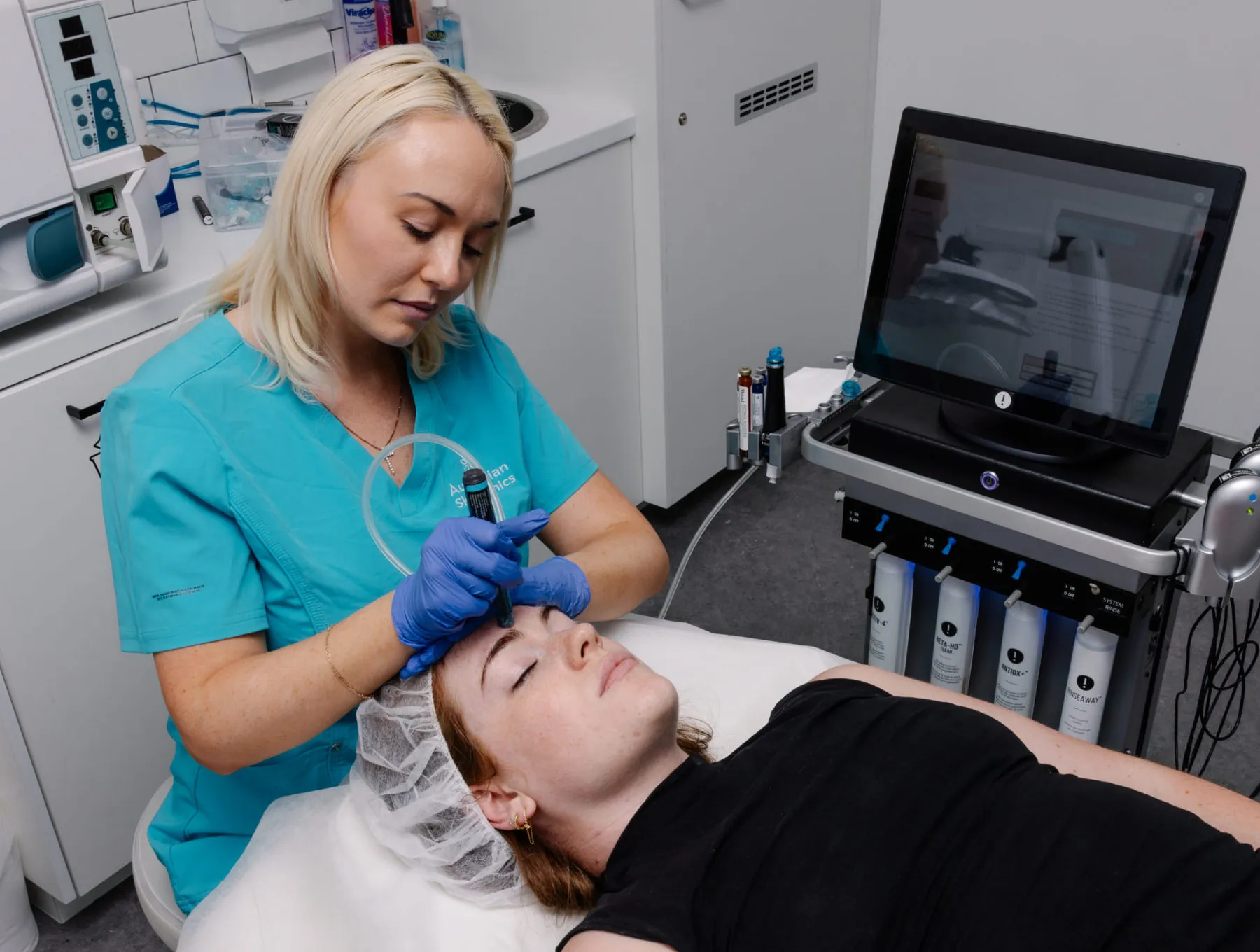
HydraFacial for skin that has lost its glow
A HydraFacial cleanses, exfoliates, and infuses hydration in one session without meaningful downtime. It is a useful reset for skin that has gradually gone dull and dehydrated, and the results are visible straight away rather than building over weeks.
Dead cells build up faster in the cold and stay put. More washing does not shift them, and that is the gap a HydraFacial is designed to close. If you have never had a professional skin treatment before, this is a sensible one to start with.
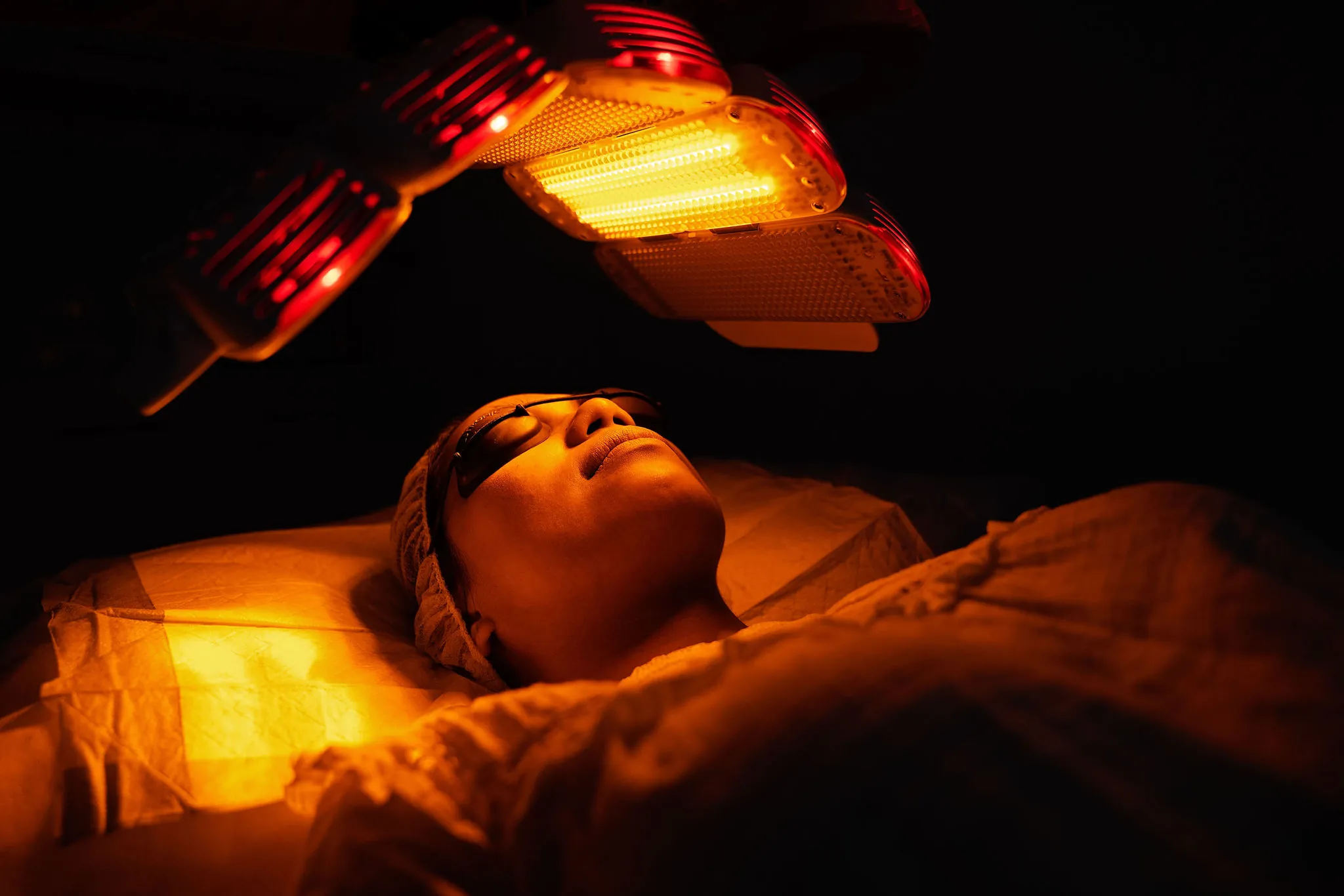
LED light therapy for reactive or sensitised skin
Using targeted wavelengths of light, LED light therapy calms and supports the skin below the surface. It suits skin that has become reactive or sensitised, particularly when it is responding to things it used to tolerate without trouble.
Nothing stings, nothing peels, no downtime. It is gentle enough to use consistently through winter rather than saving for an especially bad month, and for skin with multiple small issues running at once, regular LED sessions make more progress than one intensive treatment every few months.
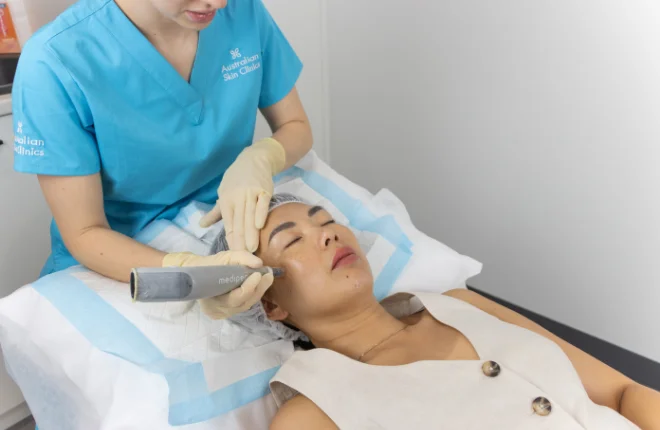
Microneedling for dullness and texture that hydration cannot fix
For skin that has become dull or uneven in texture beyond what hydration addresses, microneedling works differently to either of the above. Fine needles create controlled micro-injuries that trigger the skin’s own repair process, improving tone and texture over a course of sessions. It is not the right starting point for everyone, and a clinician will assess your skin before recommending it.
What to look for in a clinic
With any of these treatments, the person doing the assessment matters as much as the device. Results depend on how your skin is assessed, which approach is chosen, and whether it adjusts as your skin responds. Every consultation and treatment at Australian Skin Clinics is carried out by a qualified clinician who can tell you when a treatment is right for your skin and when it is better to wait.
Australian Skin Clinics operates nationally, with the same standard of care across every location. If you move or travel partway through a course, treatment continues at a different clinic without starting again.
A Good Time to Pay Your Skin Some Attention
Winter is not an easy time for skin, but it is a good time to actually do something about it. Lower UV levels mean many treatments are easier to manage than they would be in summer, recovery is more comfortable, and there is less competing with the results.
If your skin needs attention this winter, book a complimentary consultation at a clinic near you. A clinician will look at your skin, tell you honestly what it needs, and sometimes that answer is to leave it alone. That is a legitimate outcome.
FAQs
Why does my skin feel tight even after I moisturise?
Tightness after moisturising often points to dehydration rather than dryness. The skin needs water drawn in rather than just oil locked on top, and a hydrating serum applied underneath the moisturiser, ideally to damp skin, makes a more noticeable difference than switching to a richer cream.
Is the T-zone being oily but my cheeks feeling tight a winter thing?
That pattern is a common sign of dehydration, which can affect any skin type, including oily and combination skin. The skin produces more sebum to compensate for water loss, which is why the T-zone can still look shiny even when the face feels generally uncomfortable.
Should I change my whole routine for winter?
A full overhaul is rarely necessary and can introduce too many variables at once. Swapping a foaming cleanser for a cream-based formula and adding a hydrating serum tend to make the biggest difference, and both can be slotted into an existing routine without changing everything around them.
What does a HydraFacial actually do for dry skin?
It cleanses, exfoliates, and infuses hydration in one session, which gives the skin an immediate reset when a home routine is not keeping pace. Whether it is the right option for your specific skin concerns is something a clinician will confirm at a consultation rather than before one.
Can winter dryness affect how other treatments work?
A compromised skin barrier can affect how treatments like laser or pigmentation treatments are sequenced, since sensitised or dry skin may need to be addressed first. A clinician will assess where your skin is before recommending anything, and build that into the plan.