




Ask around, and there’s a good chance someone you know has had a Hydrafacial®. It’s a common choice for a first professional facial, and it’s easy to see why. It’s a three-stage treatment that cleanses, exfoliates and hydrates your skin in one appointment, with no needles and minimal prep.
A first visit usually starts with a short chat about your skin, then moves through those three stages in the chair. Most treatments take 30 to 60 minutes, depending on the version you book, and plenty of first-timers find the whole thing far calmer than they expected.

How a Hydrafacial Differs From a Regular Facial
A traditional facial relies on hands, steam and a series of products. A Hydrafacial® treatment covers the same basic jobs, but its cleanse, extract, and hydrate approach uses a handheld device that clears the skin and applies serums at the same time. That combination is what makes it feel so different in the chair.
The order of the treatment helps each stage work together. Exfoliation prepares the skin by lifting away dead skin cells and excess oil, creating a clean surface for extraction. Serums are then applied to freshly treated skin, replenishing it with hydration and targeted ingredients selected for its needs.
A Hydrafacial also works on the skin’s surface, so it’s a refresh rather than a deep resurfacing treatment, and its peel step is much milder than a traditional chemical peel. That makes it a comfortable introduction if you’ve never had a professional treatment before.
Before You Sit Down
Most first appointments start with a quick conversation. Your therapist looks at your skin, asks about your routine and checks that the treatment suits you, choosing serums tailored to your skin’s needs. Some clinics add a detailed skin scan to photograph the skin under different light, picking up oil, pigmentation and moisture levels the mirror can miss.
Your therapist will also ask about anything that could affect how your skin responds to the treatment. This includes recent sun exposure or tanning, which can make skin more sensitive to exfoliation, as well as:
- a cold sore or broken skin that needs time to heal
- an aspirin or shellfish allergy
- pregnancy or breastfeeding
- any Cosmetic Aesthetics treatment in the past two weeks
- skincare containing retinol or exfoliating acids
These questions help your therapist understand what your skin has been exposed to recently and whether anything needs to be changed before your treatment.
The Three Stages, As You’ll Feel Them
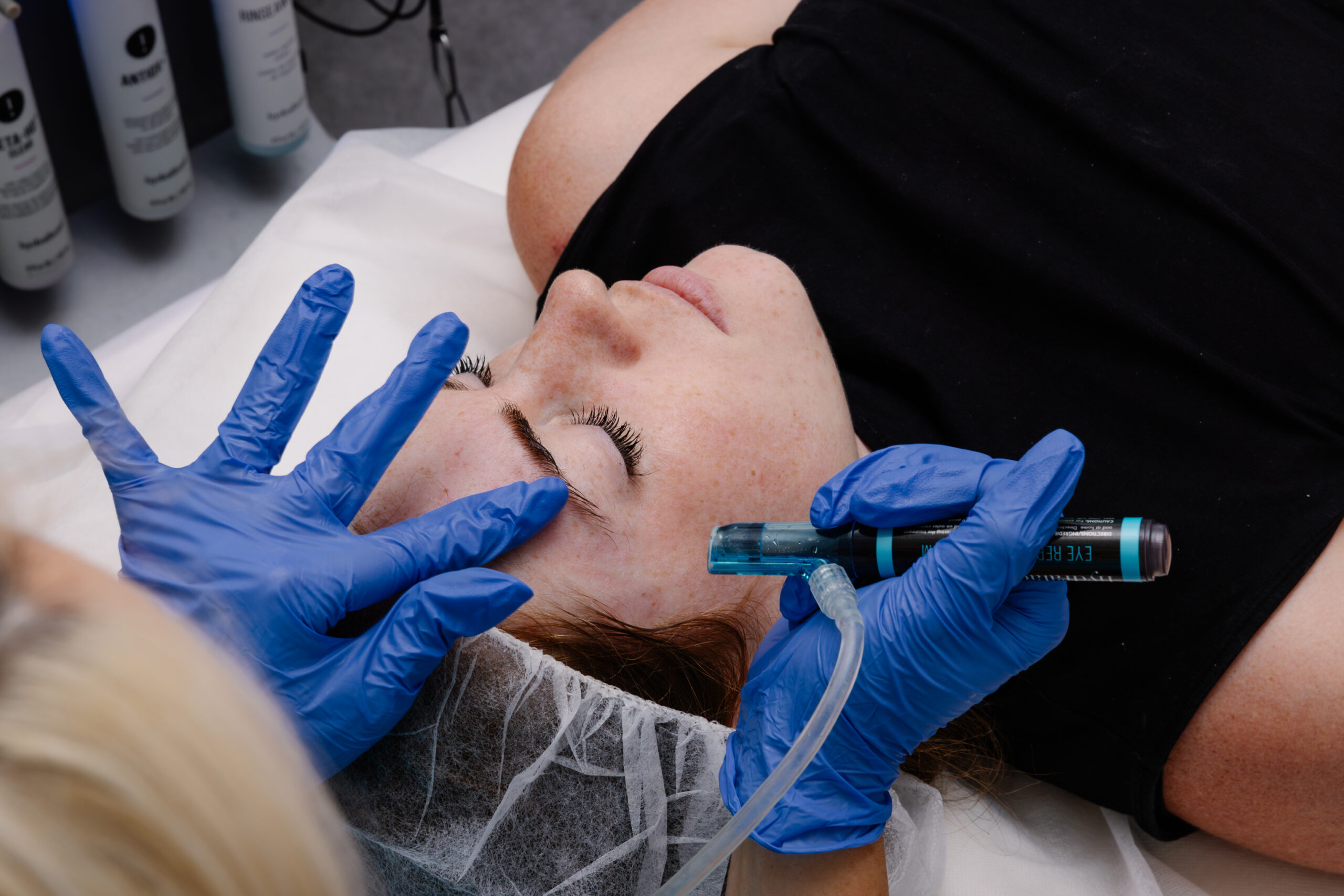
Once you’re lying back with your eyes closed, your therapist works across your face in sections. Each stage feels different, from the exfoliation and extraction to the final serum application.
Cleanse and Exfoliate
The first stage is the gentlest. A cool, wet tip glides across your skin in slow passes, a bit like a light scrub with plenty of water, lifting away surface oil and dead skin cells as it goes. There’s no scratching or pulling.
Your therapist may pause between passes to check how your skin is responding. It’s a good moment to ask questions, and a small shift to get comfortable won’t interrupt anything.
The Peel and Extraction
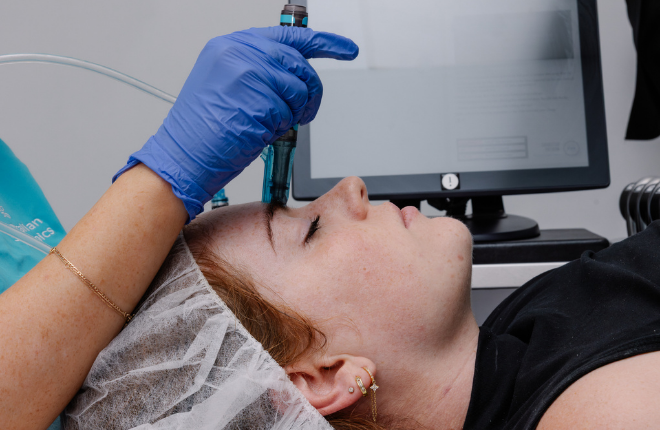
Next comes a mild exfoliating solution, which can tingle for a moment, a bit like a fizzy face mask. Then the suction starts, usually strongest around the nose and chin, where pores tend to congest.
It’s noticeable, but it shouldn’t feel sharp. If it ever feels too strong, say so. Therapists would much rather check in with you than have you lying there tense, and most people find it easier to relax into after the first minute or two.

Hydrate
This final stage brings the treatment to a close with a series of targeted serums chosen for your skin on the day. The products are worked across the face, often leaving the skin feeling fresh, smooth and comfortably hydrated.
This is also where the other versions differ. Deluxe and Platinum both add a session of LED light and a little extra time, while Platinum also includes lymphatic drainage.
What Your Skin Does Next
Most skin looks a little pink straight after, due to the increased blood flow from the exfoliation and suction. It typically settles within a few hours, and skin often feels smoother and cleaner to the touch. Many people notice this change.
Many therapists also show you the used solution at the end, so you can see what came out of your pores. Some people find it oddly satisfying, while others would rather not look. Either reaction is completely normal.
Aftercare is simple, with a few things worth keeping in mind as your skin settles:
- First few hours: leave your skin bare so the serums can settle.
- First 24 hours: skip active ingredients and stay out of direct sun.
- First week: avoid scrubs and exfoliating products, and wear SPF every morning.
After the first week, most people can return to their usual skincare routine. Your therapist will also let you know if there are any particular products to avoid based on the serums used during your appointment.
One Treatment or a Short Course?
After trying Hydrafacial® for the first time, if you like the results and want to keep going, a common starting point is 3 to 6 treatments over 6 to 12 weeks, then followed by monthly maintenance. It is a guide rather than a set schedule, though, and your skin may call for something different.
How often you go back depends on your skin, your goals and your budget. Some people keep a regular monthly rhythm, while others book around the seasons, such as when summer heat leaves skin congested or winter air leaves it tight.
Because it’s a lighter treatment, it’s also easy to plan around an event, as long as you leave a few days’ buffer the first time. That way you know how your skin responds before the day itself, and a week gives reactive skin more room to settle.
Is It the Right Facial for You?
A Hydrafacial® tends to suit people who want to improve the overall look and feel of their skin rather than target one specific concern. It’s useful when skin looks dull, feels dehydrated or has some congestion, bringing exfoliation, extraction and hydration together in one treatment.
Microdermabrasion is another option, but the two exfoliate differently, with different approaches to what they target and how the skin feels afterwards. Hydrafacial’s combination of exfoliation, extraction and hydration makes it useful for people who want to address several aspects of their skin during the same appointment.
That does not mean it is the right choice for every skin concern. If you are looking to treat something specific, your consultation is the time to discuss whether it is suitable or whether another treatment would be more appropriate.
What to Look for in a Hydrafacial Clinic
It’s easy to think of a Hydrafacial® as a device doing all the work, but the therapist shapes the experience just as much. They’re the one reading your skin, choosing the serums and checking in as each stage moves across your face, so it helps to feel comfortable with them from the start.
Skin has been the focus at Australian Skin Clinics since 1996, and appointments there begin with a conversation about your skin before anything is recommended.
Hydrafacial is available at selected ASC clinics, with Deluxe and Platinum at participating locations, so it’s worth checking which clinic offers it before you book. If your goals point somewhere else, your therapist can talk you through the other skin treatments on offer.
Your First Step
There’s no rush to decide anything before your first visit. When you’re ready, you can book a free consultation and use it to see your skin up close, ask what each stage involves and get a feel for the clinic. Whether you go ahead on the day is entirely up to you.
Some people book their first Hydrafacial® straight after, while others take the information home and think it over. Either way, you’ll go into your first treatment knowing what to expect, which makes it much easier to lie back and enjoy it.
FAQs
Does a Hydrafacial® hurt?
Most people find it comfortable, and many find it relaxing. The parts that stand out are a brief tingle during the peel and steady suction during extraction. If you’re anxious, mention it at the start and your therapist can talk you through each stage.
How long does a first Hydrafacial appointment take?
Plan for a little longer than the treatment itself. Most treatments run 30 to 60 minutes depending on the version, and a first visit adds time for your consultation and any paperwork, so arriving a few minutes early helps.
Can I go back to work or exercise afterwards?
Going back to work is fine for most people, especially if you’re happy to go bare-faced for a few hours. Exercise is better left until the next day, as sweat and heat can irritate freshly treated skin and keep it flushed for longer.
Is a Hydrafacial® suitable for acne-prone skin?
It’s often used on congested and acne-prone skin, as the extraction stage clears out pores. If you have active, inflamed breakouts, your therapist may suggest waiting until they settle or a different approach. Mention any prescription acne treatment at your consultation.
How soon will I notice a difference?
Skin often feels smoother and cleaner once you’re out of the chair, and some people notice more of a change across a short course. Results vary with skin type and routine, so your therapist can give you a realistic idea at your consultation.
Should I stop my skincare before a Hydrafacial?
Your usual cleanser and moisturiser are fine to keep using. If you use a prescription skincare product, mention it at your consultation so your therapist can check the timing.