




Something predictable happens when women talk about booking a skin treatment. They mention it, then soften it straight away with, “I know it’s a bit indulgent,” or, “It’s a treat, really.” The apology arrives before anyone has even asked for one.
Skincare gets filed under guilty pleasures, somewhere between a long bath and a second glass of wine. But looking after your skin has far more in common with getting your eyes tested or going to the dentist. It’s simply another part of regular maintenance, something you look after because it’s worth looking after.
Nobody apologises for a dental appointment. You go, someone tells you what needs attention, and you book the follow-up. A skin treatment can be approached in much the same way: as something practical that helps you understand what your skin needs and look after it properly, without having to explain or justify why you booked it.
It’s not vain to want something the way you want it
The whole idea falls apart the moment you say it out loud. Wanting your skin to look the way you’d like it to isn’t vanity. It’s the same instinct that has you getting a haircut you actually like.
You’re not chasing someone else’s face. You’re looking after the one you have, just as you do with your teeth, eyes or knees without anyone raising an eyebrow. Skin is the only organ permanently on display, yet it’s the one you’re expected to feel sheepish about.
That guilt didn’t come from nowhere. It was taught, in part, by an industry that kept its work quiet and presented the results as luck. Treat something as a secret for long enough and ordinary upkeep starts to look like vanity.
Taking your skin seriously looks like a plan
This is where the treat framing does real damage. A facial before a wedding can be lovely, but one appointment can only do so much, even if nobody mentions that while you’re booking it.
Taking your skin seriously looks different. Someone assesses what’s actually happening, explains what needs attention and maps out a sequence that makes sense. A few months of treatments that build on each other is a plan, not a splurge.
That starts with an assessment. For many Australians, a skin analysis looks beneath the surface at what’s building up before it becomes obvious, so you can understand what your skin actually needs rather than relying on what you can see in the mirror.
What an assessment actually covers
It’s less mysterious than it sounds. The conversation is about what your skin is doing now, and you should come away with a clearer idea of what it needs, whether or not you book anything.
- What’s happening with your skin now: including concerns you may have stopped noticing because they developed gradually.
- What’s changed over time: looking at where your skin is now rather than comparing it with how it looked in your twenties.
- What can realistically be improved: including what to expect and roughly how long it could take.
- What doesn’t need treating: knowing when to leave something alone can be just as useful as knowing what to address.
That last one matters most. Someone who tells you a treatment isn’t right for your skin, or that the timing’s wrong, is worth far more than someone who agrees with everything you suggest.
What winter actually changes
Winter gets talked about as a reset, which is partly marketing and partly true. What actually changes is the light outside and the air inside, and those two things pull in opposite directions.
Less UV is the useful half. Anything that leaves skin more sun-sensitive is easier to manage through these months, which is why work on pigmentation tends to be a cool-weather project. A winter skin reset is really just sensible scheduling, and a course started in July has room to finish before the light gets strong again.
Heated indoor air does the opposite. It pulls moisture out of your skin faster than the cold outside, and a barrier running short on water stops defending itself properly. So what begins as winter dryness ends up as skin sensitivity. Tightness, redness and a sudden intolerance for products you’ve used for years all point the same way. It’s a sign your skincare routine needs to adapt, not just your moisturiser.
What people book, and what for
Most appointments start with something ordinary. When people sit down, they tend to describe a handful of familiar concerns:
- Skin that looks flat, especially in photographs, even when nothing else has changed.
- Texture that catches, so makeup sits on the surface instead of settling into it.
- Tone that’s become patchy since summer, particularly as a tan fades and unevenness shows.
- A general sense that nothing is working anymore, even though the products used to help.
These are concerns, not treatments, and it helps to keep them in that order. Choosing the right treatment comes later, once a clinician has seen your skin and can work out what is actually going on.
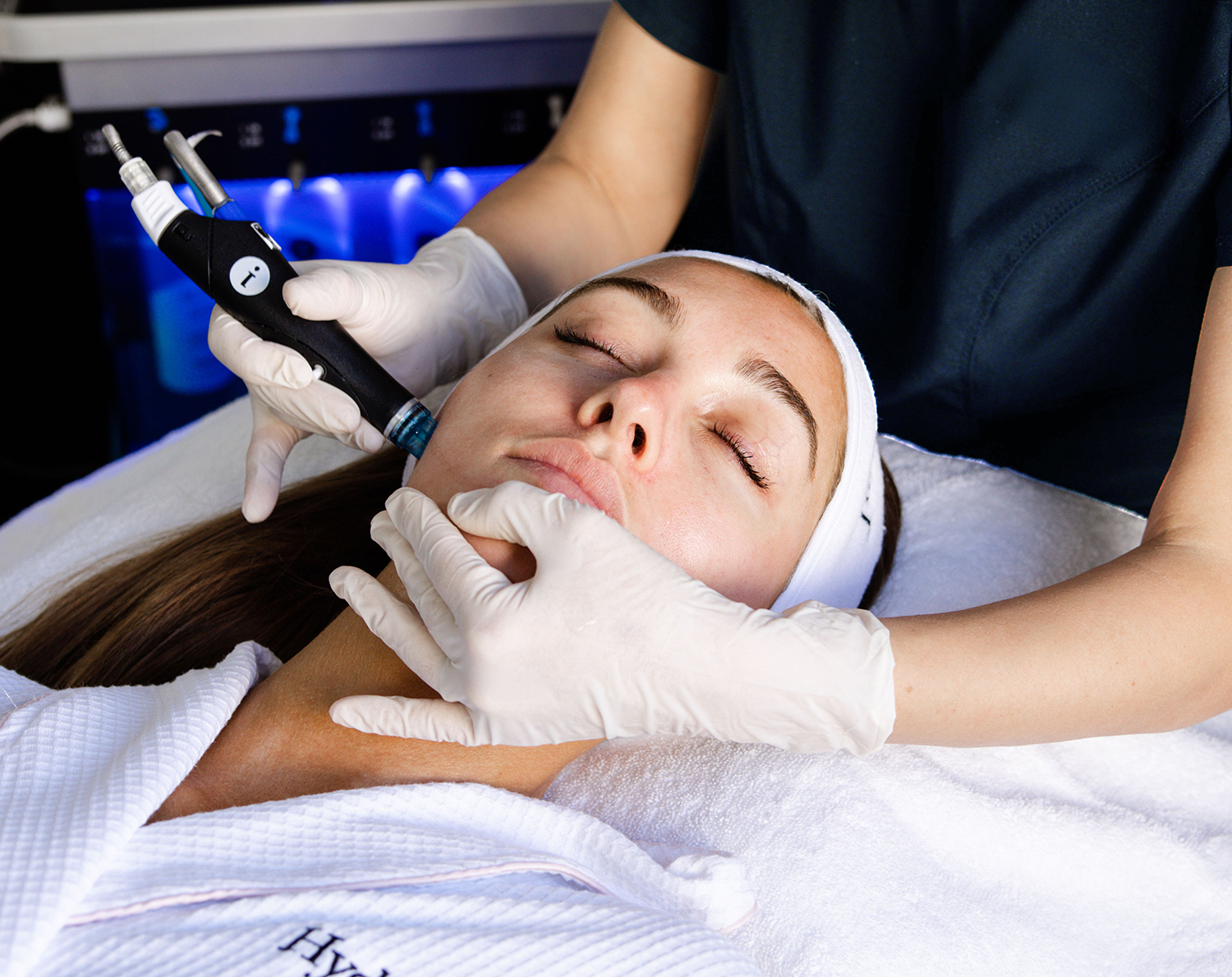
A HydraFacial for skin that’s gone flat
Dull, dehydrated skin is common over winter, and a HydraFacial can address it in a single appointment. It cleanses, removes surface build-up and replenishes hydration without leaving you needing time to recover.
It suits skin that has gradually lost its glow rather than one specific concern. That makes it a sensible starting point if you’ve never had a clinical treatment and aren’t sure where to begin.
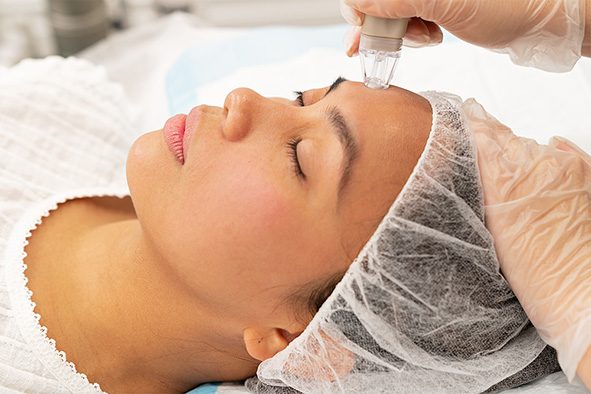
Microdermabrasion and dermaplaning for surface texture
Rough patches, visible pores and makeup that won’t sit smoothly are common signs of uneven texture. With microdermabrasion, a fine tip works across the surface to remove dead skin and build-up in around half an hour.
For a smoother finish, dermaplaning removes the dead surface layer along with fine facial hair, helping makeup sit more evenly. Both can improve texture without downtime, making them useful when smoothing the surface is the main concern.
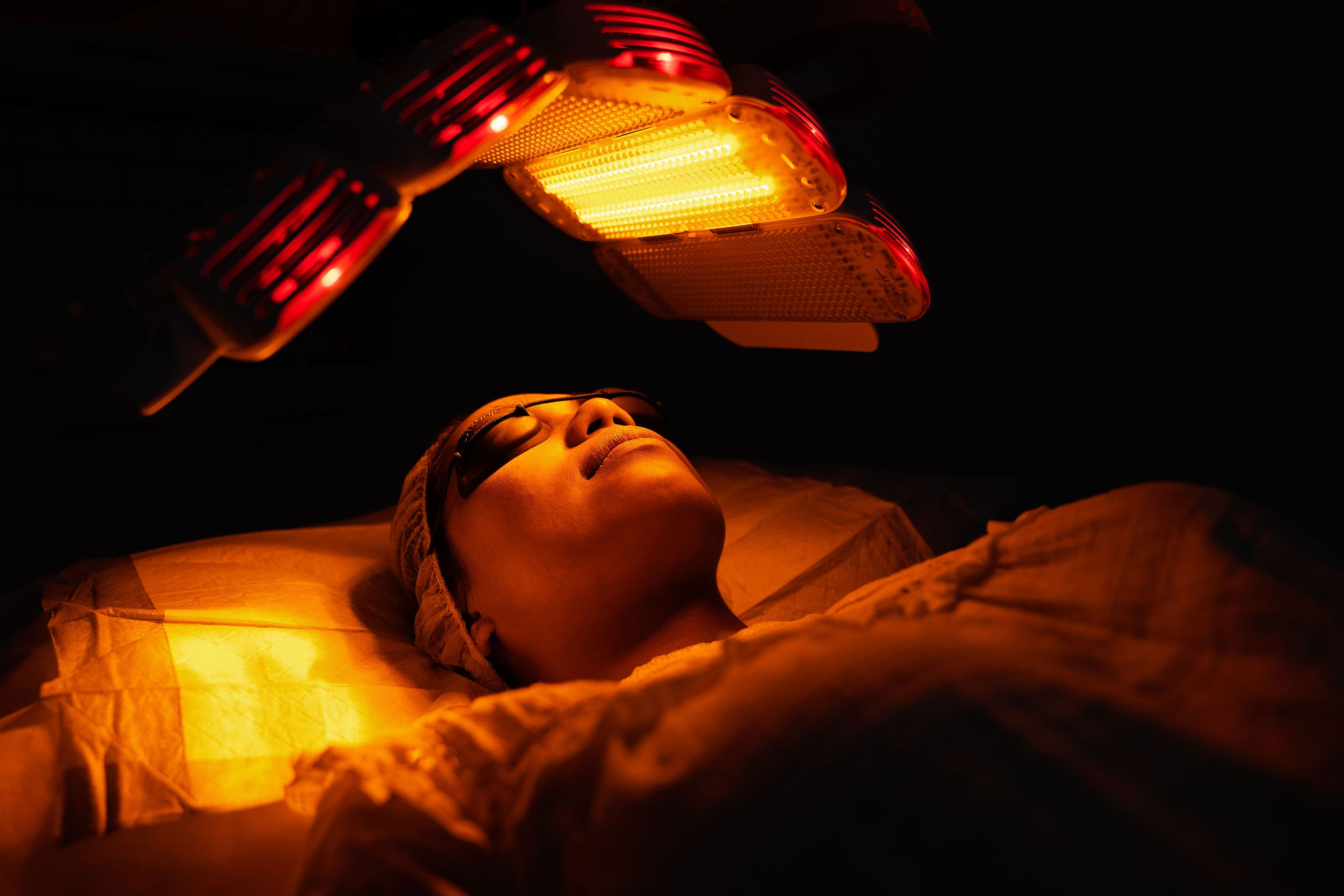
LED light therapy when nothing’s settling
Some skin doesn’t have one obvious problem so much as several small ones at once, reacting to things it used to tolerate. That’s where LED light therapy can help, using targeted light for around 20 minutes without stinging, peeling or downtime.
It’s gentle enough to use regularly rather than saving for the occasional bad month. When skin is reactive, a consistent, gentle approach can make more sense than an intensive treatment every few months.
You shouldn’t be wasting money on the wrong things
Deciding your skin is worth investing in doesn’t mean saying yes to everything. A recommendation worth acting on should come with a clear reason, a rough idea of how many appointments you’ll need and an honest answer when the right advice is to wait.
For any treatment at Australian Skin Clinics, your consultation and treatment are carried out by trained therapists. The person recommending a treatment is qualified to tell you when it’s appropriate and when it’s better to hold off.
That same standard applies across clinics nationwide, which means a plan started at one clinic can continue at another. It’s a useful option if you move, travel or simply want consistency in your care.
Skincare self-care doesn’t need a reason
Skincare self-care doesn’t need an occasion. There’s no wedding to justify it, no birthday coming up and no rough month that earns you something in return. Deciding you’d like your skin looked at is reason enough.
It starts with booking a skin consultation, which is a conversation rather than a commitment. Someone takes a proper look at your skin, you talk through what you’ve noticed, and you leave with a clear idea of what’s worth doing and what isn’t.
Sometimes the answer is that your skin is in good shape and the sensible move is to leave it alone for now. That’s a legitimate outcome, and far better than being talked into something you didn’t need.
FAQs
What do I need to do before a pigmentation treatment?
Avoid sun exposure for four weeks before treatment, and avoid waxing or treating sunburn in the area for two weeks. Your skin also needs to be prepared with a tyrosinase inhibitor and SPF for at least two weeks beforehand, which is why the consultation is scheduled two weeks before your first appointment.
Do I need a patch test?
Laser treatments require a patch test, which is done during the consultation two weeks before your first session. In Queensland, laser treatment for pigmentation also requires a Medical Opinion Letter and skin check, so these need to be factored into your timeline.
Is there anything to avoid in the first few days afterwards?
Heat is the main thing to avoid, including steam rooms, saunas, swimming pools and strenuous exercise for the first 24 hours. On the day of treatment, keep fake tan away from the area, and wait at least three days before bringing active skincare back into your routine.
Can I have more than one treatment in the same appointment?
Some treatments work well together. Dermaplaning can clear the surface before another treatment, while LED is often added at the end, but combining two resurfacing treatments in one appointment is generally best avoided.
Can I keep having treatments through spring and summer?
Most treatments can continue throughout the year, although anything that increases sun sensitivity requires more careful use of SPF and sun protection. Pigmentation treatments are the main exception, as sun exposure during and after a course can interfere with results.